
Science today.
A healthier tomorrow.
Plain-language notes on the compounds we supply and the analytical tests that stand behind them.
Our Science & Quality Control
Complete laboratory analytical reports (COA), HPLC purity assays, and strict mass spectrometry identification.
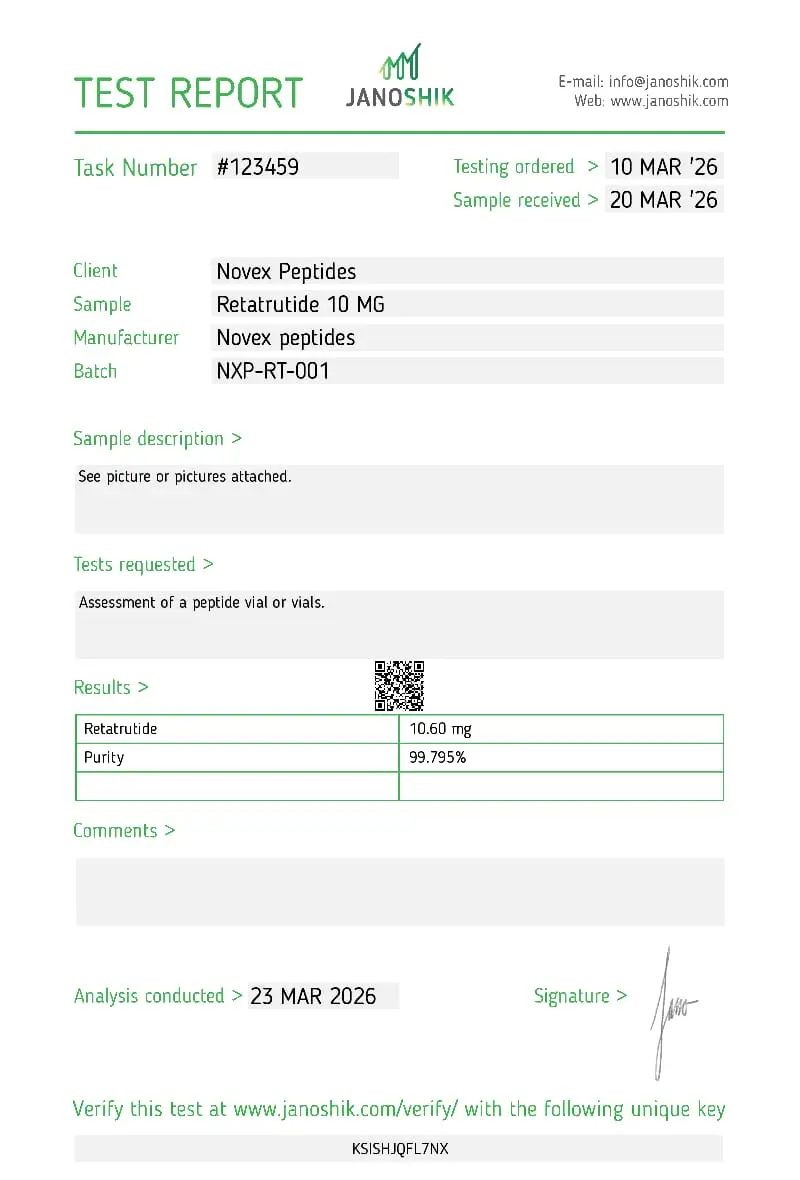
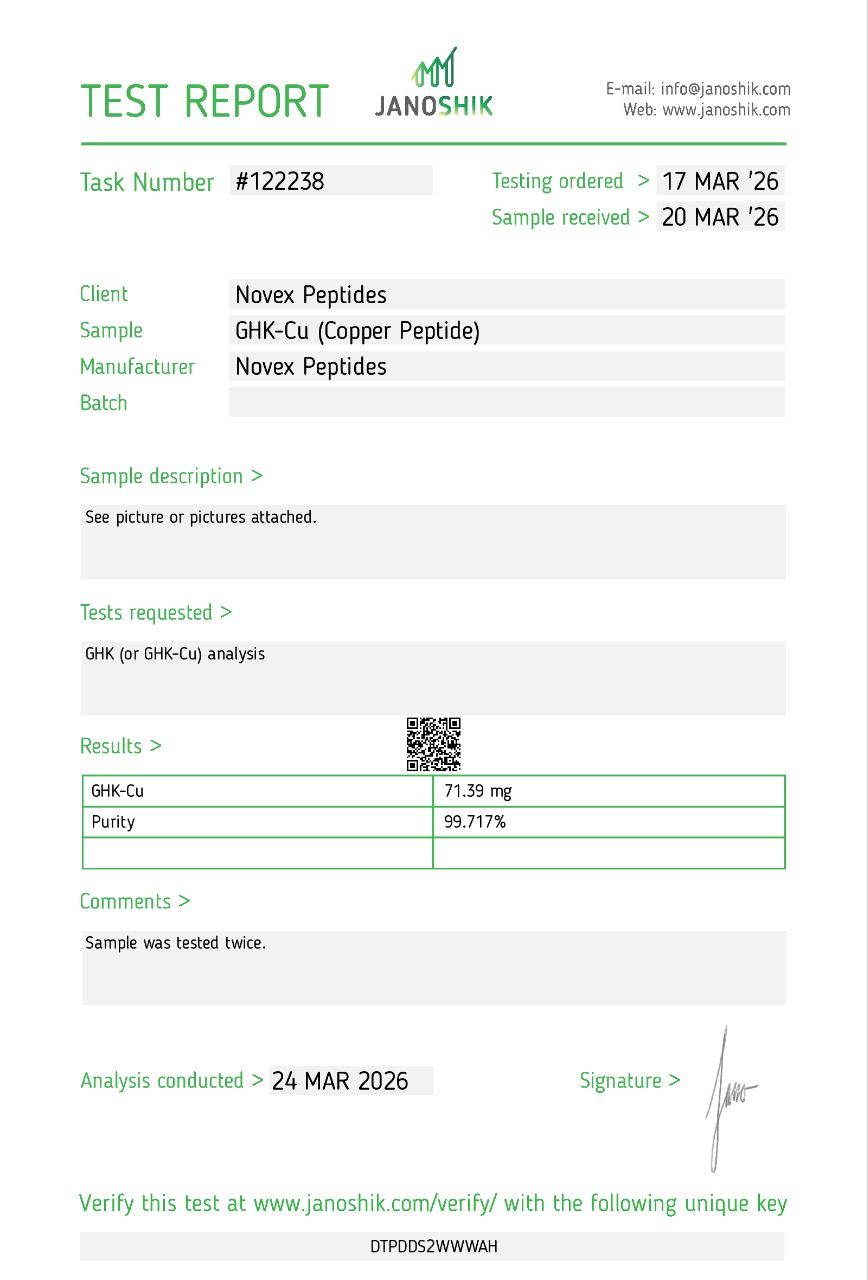
How a batch is tested
Three questions, three analytical methods. Together they verify exactly what is sealed in the vial.
Identity
Mass spectrometry confirms the molecular weight matches the intended peptide chemical formula.
Purity
High-performance liquid chromatography (HPLC) separates the sample components and certifies purity levels exceed 99%.
Content
Quantitative assay checks confirm that the active peptide mass stated on the label matches what the sealed vial holds.
Scientific Glossary
Essential terminology explaining peptide chemistry, manufacturing standards, and cold-chain integrity.
Freeze-dried into a stable powder cake under vacuum, keeping the peptide molecular structure intact far longer than liquid solutions.
High-performance liquid chromatography, the international laboratory analytical standard for resolving and measuring peptide purity.
A biological ligand that activates a specific cellular receptor. Retatrutide, for instance, operates as a triple-receptor agonist.
Current Good Manufacturing Practice, an internationally audited regulatory framework for consistent, documented pharmaceutical production.
Certificate of Analysis, the official laboratory document reporting analytical test results, lot numbers, and compound assays for a specific batch.
An unbroken, temperature-monitored logistics protocol from laboratory cryo-storage to final delivery to prevent thermal degradation.